TVK performed better where male turnout was higher
Tamil Nadu turnout data shows mixed support for TVK among women voters
Tamil Nadu’s 2026 Assembly election created a major political change in the state. Actor-turned-politician Vijay and his party, Tamilaga Vettri Kazhagam (TVK), surprised everyone by winning 108 seats in their first election. The results changed the political balance in Tamil Nadu and weakened the ruling DMK alliance.
But apart from the big political result, another important question came up after the election: Did women voters strongly support TVK?
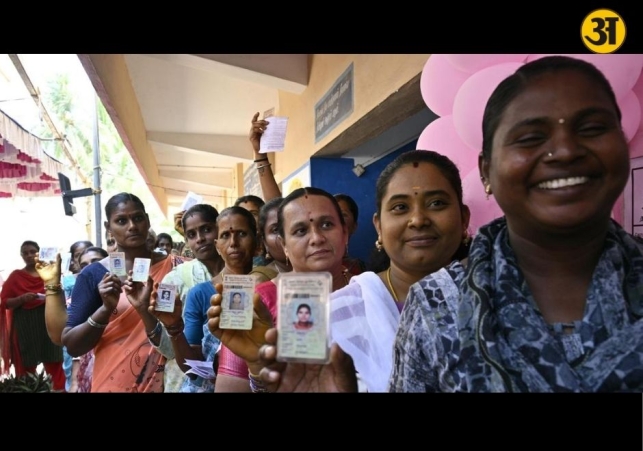
At first look, many people believed women played a major role in the election because female voter turnout increased sharply across the state. However, a closer look at the numbers shows a more complicated picture.
The data suggests that TVK actually performed better in constituencies where male voter turnout remained stronger than female turnout. On the other hand, the DMK alliance performed better in seats where women voted in larger numbers than men.
This makes the Tamil Nadu election not only a political wave election, but also a turnout-based election where voting patterns of men and women shaped the final result.
Tamil Nadu saw a huge rise in voter participation in the 2026 election. Overall turnout increased from 72.7 per cent in the 2021 Assembly election to 85.1 per cent in 2026. This was one of the highest turnouts recorded in the state in recent years.
Male turnout also increased sharply. In 2021, male turnout was 72.8 per cent. In 2026, it rose to 83.7 per cent.
But women voters showed an even bigger jump. Female turnout increased from 72.6 per cent in 2021 to 86.2 per cent in 2026. This meant women voted slightly more than men across the state.
Because of this strong participation by women, many observers first believed that women voters may have driven TVK’s success. But when constituency-wise voting patterns were examined, the situation appeared more complex.
In Tamil Nadu’s 234 Assembly constituencies, women voters outnumber men in 218 seats. Only 16 constituencies have more male voters than female voters.
Even in those 16 seats, women turnout was higher than men turnout in 12 constituencies. TVK won only four out of these 16 seats.
This means the party’s success cannot simply be explained by the number of women voters. Instead, the key factor appears to be turnout differences between men and women.
Where TVK performed strongly
The numbers show that TVK did best in constituencies where male turnout stayed ahead of female turnout.
Out of the 218 constituencies where women voters were more in number, there were still 70 seats where men turned out to vote in larger percentages than women. TVK dominated these constituencies and won 49 of them.
This was one of the biggest reasons behind the party’s strong performance.
In another group of 148 constituencies, women not only outnumbered men on the voter rolls but also voted in higher percentages. Here, TVK’s performance became weaker as the female turnout gap increased.
ALSO READ: US court strikes down Trump’s global tariffs, calls them illegal
ALSO READ: US ends ‘Operation Epic Fury’ against Iran but tensions remain high
In seats where female turnout was only slightly higher than male turnout, between zero and one percentage point, TVK still managed to win 19 seats.
Where the gap between women turnout and men turnout was between one and three percentage points, TVK won 21 seats.
However, beyond that point, the party’s performance dropped sharply.
In constituencies where women turnout exceeded men turnout by three to five percentage points, TVK won only six seats.
In the 42 constituencies where women turnout was more than five percentage points higher than male turnout, TVK managed to win only nine seats.
These figures show a clear trend. The larger the women turnout advantage became, the weaker TVK’s performance appeared.
Political analysts say this suggests TVK may have received stronger support from male voters, especially younger men and first-time voters who were attracted by Vijay’s image and campaign style.
TVK’s aggressive campaigning, social media outreach, and celebrity appeal were especially popular among young male voters in urban and semi-urban areas.
DMK benefited from women voters
The voting pattern for the DMK-led alliance looked completely different.
In constituencies where women turnout was higher, the DMK alliance performed much better.
Out of the 218 constituencies with more women voters, the DMK alliance won only nine seats where male turnout remained higher than female turnout.
But as the women turnout gap increased, the DMK alliance’s performance improved steadily.
The alliance won 11 seats in constituencies where women turnout was three to five percentage points higher than men turnout.
In constituencies where women turnout exceeded male turnout by more than five percentage points, the DMK alliance won 26 seats.
The trend became even clearer when analysts studied the seats retained by the DMK alliance.
In the 2021 election, the DMK-led alliance had won 159 seats. In 2026, it managed to retain only 53 of them after the strong challenge from TVK.
Out of these 53 retained seats, 48 constituencies had higher female turnout than male turnout.
This means more than 91 per cent of the seats retained by the DMK alliance were constituencies where women participated more actively in voting.
Experts believe welfare schemes aimed at women may have helped the DMK alliance hold support in these areas. Programmes related to free bus travel, financial support, and household benefits may have influenced women voters.
At the same time, TVK’s campaign focused heavily on change, youth support, and anti-establishment politics. This message may have connected more strongly with male voters frustrated with existing political parties.
The election therefore produced two different political maps inside the same state.
In areas where male turnout remained strong, TVK swept many seats. But in areas where women turnout increased sharply, the DMK alliance stayed more competitive and managed to protect several constituencies.
This is why many political experts are calling Tamil Nadu 2026 a “turnout election.” It was not only about party popularity or leadership. It was also about which groups of voters came out in larger numbers and how those voting patterns affected the final results.
The election has now become an important case study for political parties trying to understand changing voter behaviour in Tamil Nadu.
Related News